Define the tote’s role in the retail range
Planning private label tote bags starts with the customer and the role of the product in your range. Decide whether the tote is an everyday accessory, a work companion or a bag intended to carry another retail purchase. These uses create different expectations for capacity, appearance and presentation. Describe where it will be sold and how shoppers will encounter it, whether hanging on a fixture, folded on a shelf or shown online. This context helps the development conversation connect the product with the way it will be selected and used.
Build an assortment around meaningful choices rather than adding variations automatically. Identify the core shape and the features that should connect related colors or styles. Decide which details create brand recognition, such as a handle treatment, a particular pocket arrangement or a consistent label position. Share the estimated order breakdown and desired launch window, but distinguish planning targets from confirmed commitments. A reference model can help establish direction; it does not imply stock availability, fixed specifications or an unchanged production arrangement for the private label version.
Develop the shape around contents and access
Compare a flat tote, a gusseted body and a more structured base in terms of what the customer needs to carry. Show the intended contents and their dimensions rather than choosing external proportions alone. Consider how the opening behaves when the bag is filled and whether an internal pocket interrupts usable space. A broad base may support bulky items but change the silhouette when empty. A slim body can look clean on display while needing careful review of how larger belongings pass through the opening.
Choose closures and organization with the same use case in mind. An open top offers direct access, while a zipper, snap or other closure changes both convenience and construction. Discuss whether an interior pocket, divider or attachment point adds enough practical value to justify the extra detail. Review the tote in the states customers will see: empty, carried and filled with representative contents. Record which shape is the intended presentation so product photography, sample review and packing do not each assume a different version of the bag.
Choose materials as a complete construction
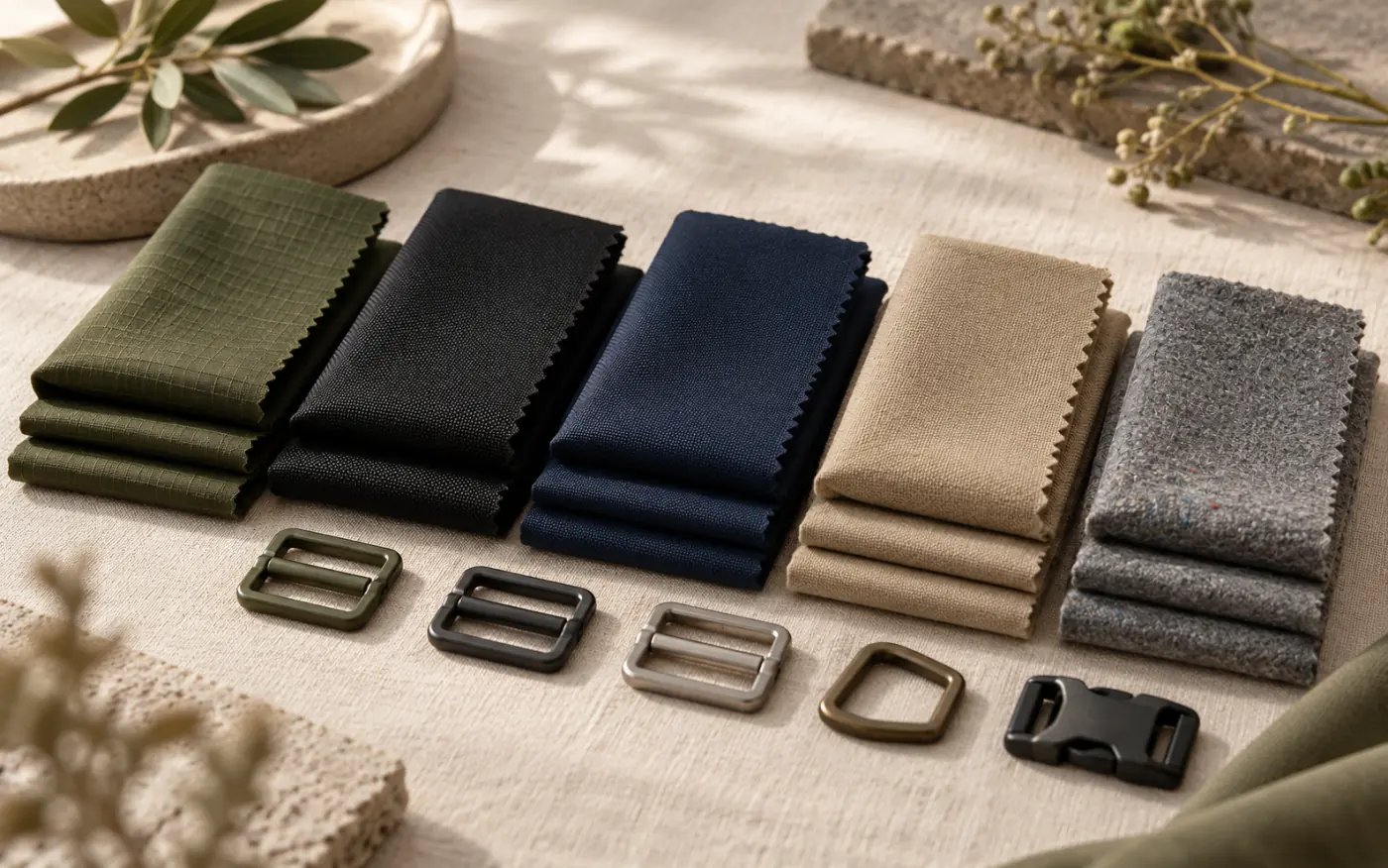
Canvas, nylon, polyester and other suitable materials can support different visual directions, but a fiber name does not define the finished tote. Compare texture, flexibility, body and the way the material folds around seams. Consider whether the bag should collapse for storage or retain a defined outline, then review lining and reinforcement accordingly. A substantial outer fabric may still need local support at a handle attachment, while a softer shell may be intentional rather than a sign of poor quality. Make these choices explicit in the brief.
Coordinate body material, lining, thread, binding and trim colors so the inside feels as considered as the outside. Review cleaning expectations with the selected construction and avoid assuming that a fabric description establishes care instructions for the complete bag. If recycled content is part of the concept, ask which components the claim covers and what documentation supports it. Ask your buyer which standards or tests apply, for example chemical or labeling requirements in the market. Confirm any material or performance language before placing it on retail copy or hangtags.
Treat handles as a key functional decision
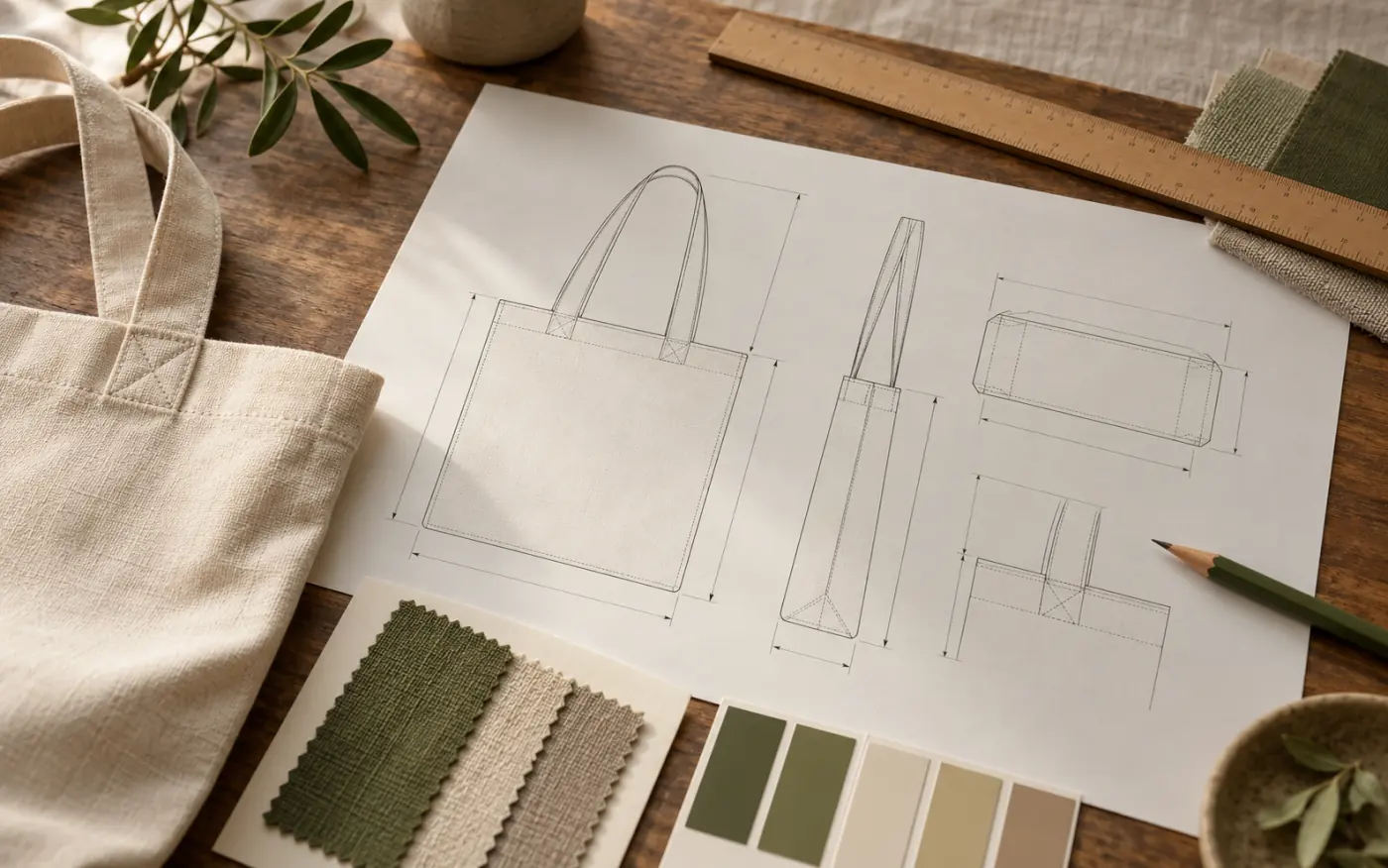
Specify how the tote will be carried: in the hand, over the shoulder or using more than one arrangement. Show handle drop and attachment positions using a consistent measurement method. Review clearance with the intended user’s clothing and the expected contents, because a bag that fits over the shoulder when empty may feel different when filled. Compare the width, edge finish and flexibility of the handles as well as their appearance. A handle that suits the photograph still needs to feel appropriate during the intended carrying routine.
Examine how the handles connect to the body and where load transfers into the fabric. Ask the production partner to explain the proposed reinforcement and how it will look inside the bag. If there are detachable straps or hardware, review attachment orientation and contact with the user. Agree any required load or durability evaluation separately, including its conditions and evidence. Informal handling can reveal discomfort or an obvious construction issue, but it should not be turned into a tested carrying-capacity claim without the relevant verification.
Make branding, hangtags and packaging work together
Choose the logo treatment after reviewing the actual body material and the intended placement. A broad printed graphic, a woven label and a subtle patch create different impressions and have different construction needs. Approve the mark on the selected surface, then check it on the assembled tote, including how seams and folds affect visibility. Keep the approved artwork, color references and positioning instructions together. If the same branding appears across a collection, confirm that each material and shape supports the intended result rather than assuming a shared logo guarantees a consistent appearance.
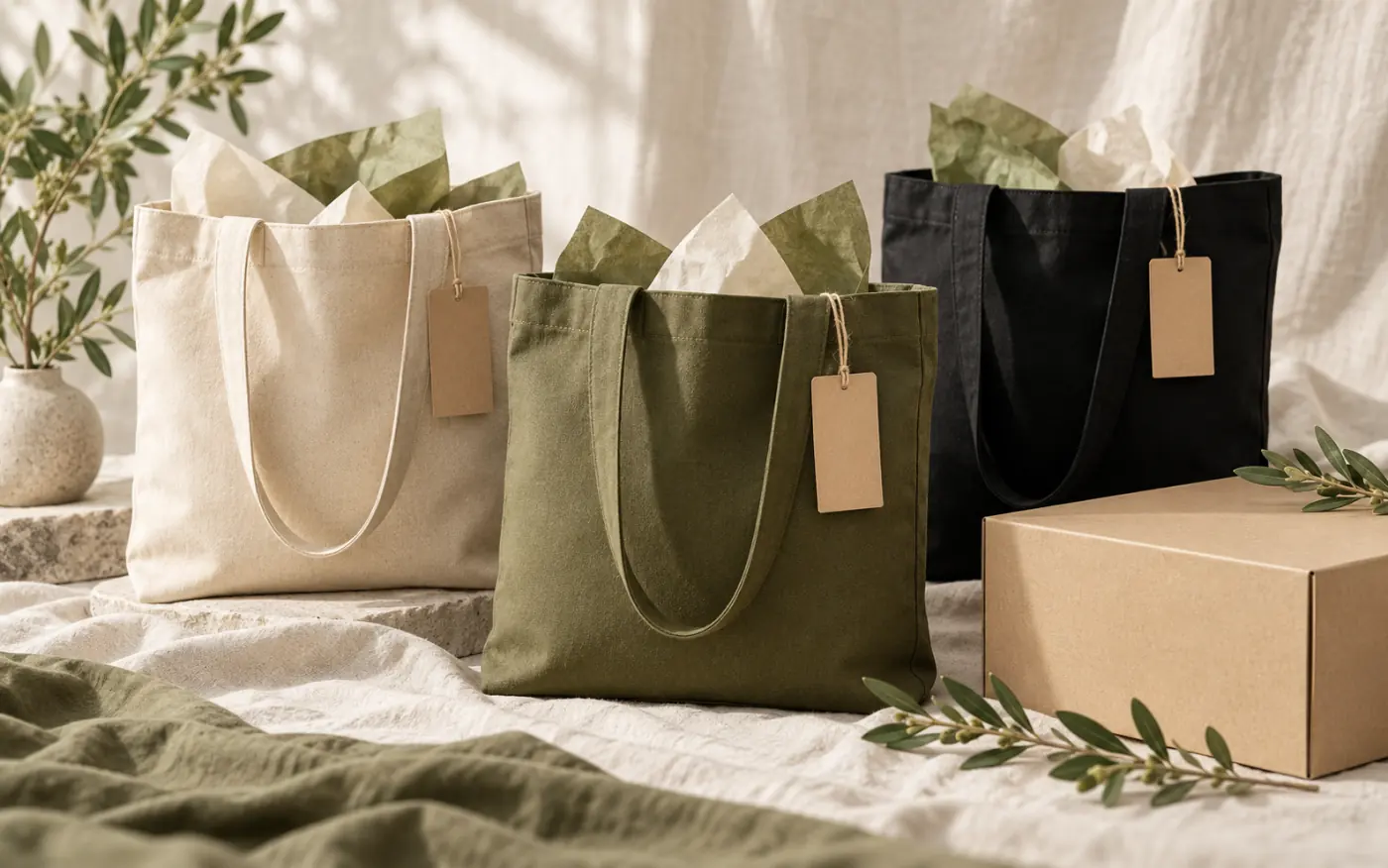
Plan hangtags and packaging around the retail channel. Identify who approves product names, material descriptions, care wording, barcodes and any buyer-required labels. Choose a hangtag attachment that does not damage the bag or obstruct a useful feature. Discuss whether the tote should arrive folded, supported or otherwise protected, and check how that choice affects presentation after unpacking. Keep product identification readable for receiving and merchandising. Do not add unsupported material, environmental or performance claims simply to fill available space on a tag or package.
Approve the retail sample and replenishment record
Review a sample with the intended handles, branding, labels and packing rather than judging the shell alone. Check representative contents, carrying comfort, opening access, stitching and overall presentation. Unpack it as a receiving team would and note creases, loose components or label placement that interfere with display. Compare the sample with the written specification and resolve any temporary material or artwork substitutions. Agree the inspection scope and order details before production, including what must be recorded if a material or component change is proposed.
Maintain a product record that connects the style code, color references, material choices, artwork, packaging and approved revision. This gives replenishment discussions a reliable starting point while leaving availability and production conditions open to confirmation. STARDOTS coordinates development, sourcing and production with partner factories for projects defined through these discussions. Share your intended assortment, destination and priorities to review a suitable plan. The objective is a retail tote whose construction and presentation have been deliberately approved, with clear responsibilities for the next decisions and no assumptions about fixed quantities or delivery timing.
Buyer checklist
Bring these points into the first project discussion.
- Define the customer, retail channel and role of the tote in the range.
- Review the shape and opening with representative contents.
- Coordinate shell, lining, reinforcement and trim choices.
- Check handle drop, comfort and attachment construction on a sample.
- Approve branding, hangtag copy, product identification and packing.
- Maintain the approved product record for replenishment discussions.
Common points to watch
- Choosing proportions for display without checking practical access.
- Judging handle comfort only on an empty bag.
- Adding unverified material or performance claims to hangtags.
- Assuming repeat orders have unchanged materials or production conditions.
Frequently Asked Questions
Should a retail tote have a lining?+
It depends on the intended feel, contents, appearance and construction. Review how the lining affects shape, interior finish, weight and access on a sample rather than treating it as an automatic quality requirement.
How do I choose the handle length?+
Define whether the tote is carried by hand or over the shoulder, specify handle drop and review it with representative contents and clothing. Use the agreed measurement method to record the approved result.
What belongs on a private label tote hangtag?+
Use buyer-approved product identity, material and care information, barcode details and any required retail content. Confirm the wording and supporting evidence before making environmental or performance claims.
Can a reference tote be adapted for a private label range?+
A reference can start a discussion about shape, handles, materials and branding. The adapted specification, material availability, sampling and production arrangement still need project-specific confirmation.
Ready to discuss your collection?
Tell us what you need and we will help define the next step.
Request a Quote