Start with the job the fabric must do
Choosing backpack fabric starts with how the finished bag will be used. Describe the expected contents, carrying conditions, appearance and cleaning expectations before requesting swatches. A soft pack that folds away and a structured commuter backpack ask different things of the outer shell. Identify contact areas such as the base, back panel and pocket edges, where the construction may need particular attention. Decide which qualities matter most to your buyer, rather than asking for a material that is simultaneously the lightest, strongest, softest and least expensive.
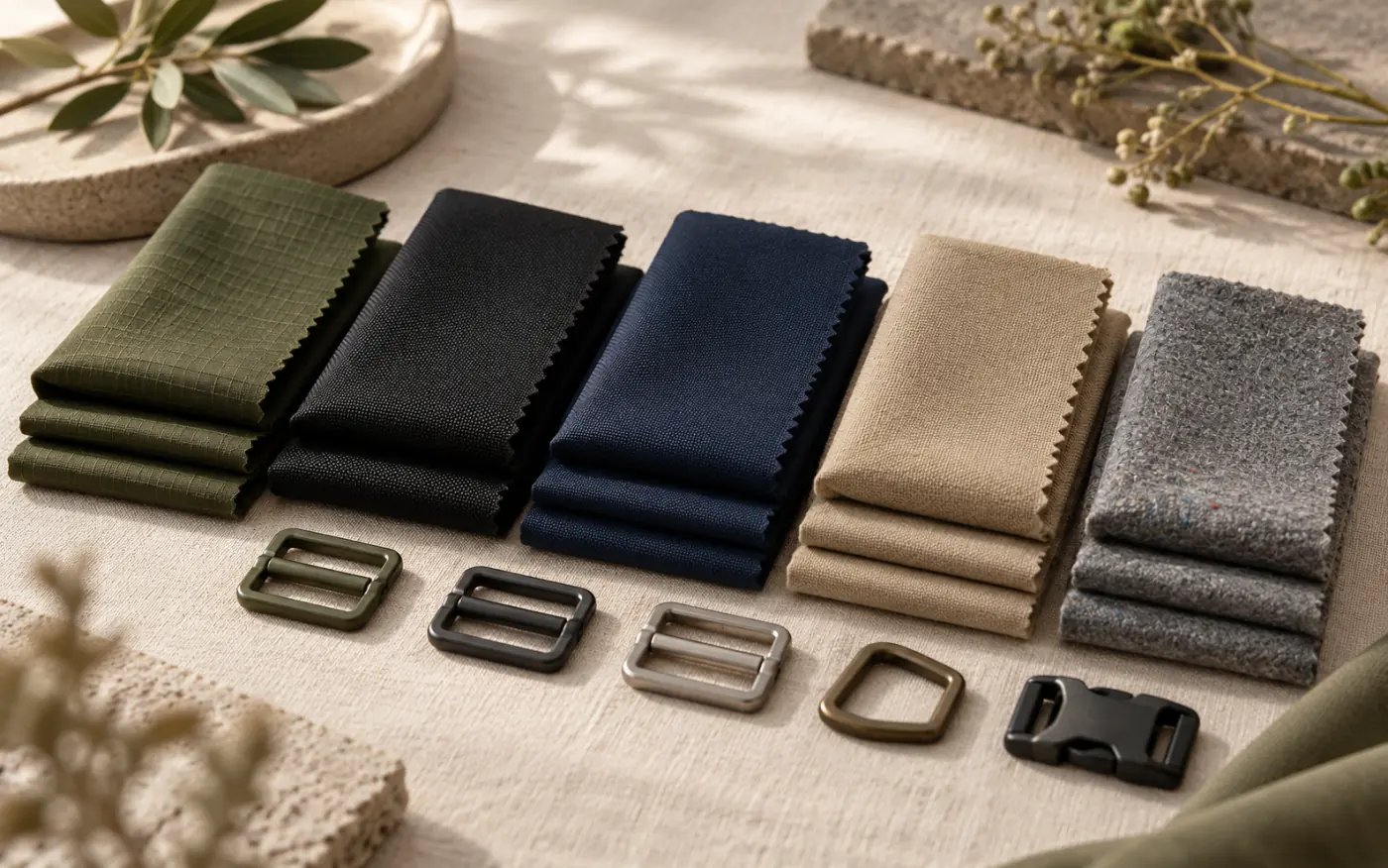
Compare complete material descriptions instead of relying on a single name. Fiber content, yarn, weave, weight, backing and surface treatment can all influence the result. Ask for a labeled swatch with an identifiable material reference so a promising option can be discussed again without confusion. Bend it, fold it and view it alongside the proposed lining and webbing. Record what you observe and what remains to be verified. A pleasing swatch is a useful starting point, but it cannot establish the performance of a fully assembled backpack.
Compare nylon and polyester as specific fabrics
Nylon and polyester are fiber families, not finished quality grades. Both can be made into backpack fabrics with very different textures and constructions. When a proposal simply says nylon, ask about the weave, finish, backing and intended application. Do the same for polyester. Compare the actual candidates for hand feel, surface appearance, flexibility and how they behave when sewn. Avoid approving a substitution on fiber name alone: a different fabric within the same family can change the shape of a pocket or the appearance of a broad front panel.
Use your design priorities to make the comparison useful. If the backpack needs a clean, structured face, examine whether the proposed fabric works with the chosen backing and reinforcement. If it needs a softer shape, assess how it folds around seams and gathers at openings. Ask how the selected color, logo process and lining interact with the fabric. Any claims about abrasion, tear resistance or color performance need evidence relevant to the chosen material and intended use. Neither nylon nor polyester automatically answers every durability or presentation question.
Understand ripstop, canvas and denier
Ripstop describes a fabric construction using reinforcing yarns in a repeated pattern; it is not a separate fiber. A ripstop option may therefore also be described as nylon or polyester. The pattern can contribute to the desired technical appearance, but its presence does not make the finished backpack immune to tearing. Canvas usually refers to a substantial plain weave fabric and may use cotton or other fibers. Ask for the composition rather than assuming every canvas option is pure cotton or has the same texture and care needs.
Denier describes yarn linear density: the mass of yarn relative to its length. It does not directly state finished fabric weight, thickness or overall durability. A higher denier describes a heavier yarn per unit length, but weave density, fiber properties and finishing also affect the fabric you handle. Use denier as part of the material description, not as a ranking that makes every higher value better. Ask to compare physical samples and discuss the finished construction before choosing a fabric because its label sounds more substantial.
Separate surface treatments from whole-bag performance
Coatings, laminations and surface treatments serve different purposes and should be described separately. A backing may change body, feel or resistance to water passing through the fabric, while a surface treatment may affect how water behaves on the face. Ask what treatment is proposed, where it is applied and how it interacts with folding, stitching and decoration. Inspect both sides of the swatch. A shiny backing or water beading on the surface does not by itself explain the performance of the complete backpack in use.
If resistance to rain or spills matters, describe the actual use scenario and ask how the whole design will address it. Needle holes, seams, openings and closures can provide paths for water even when the outer material resists penetration. Agree what evidence or testing is needed before using a product claim. Also discuss the intended care instructions and how the finish should be evaluated after handling or cleaning. Do not infer waterproof construction from a fabric name, and do not assume that a coating supports every printing or bonding method.
Evaluate recycled options with clear documentation
Recycled fabric is a sourcing description that needs detail, not a substitute for the rest of the specification. Ask which fiber is recycled, which component contains it and what documentation supports the proposed claim. A recycled outer shell does not establish the composition of the lining, foam, webbing or other parts. Keep product descriptions tied to the actual material scope. If your buyer requires particular evidence, explain that before selection so the sourcing discussion includes documentation as well as appearance and availability.
Apply the same sample review to recycled and other fabric options. Check texture, color, construction and compatibility with the intended branding. Discuss what must remain consistent on a repeat order and how any proposed replacement would be approved. Avoid assuming that a recycled option is automatically softer, stronger or better suited to the design. STARDOTS can discuss material options with production partners against the project brief; any material declaration or certification claim still needs confirmation for the selected material and order before it is used in buyer-facing content.
Approve fabric as part of an assembled sample
Narrow the choices using a comparison sheet that records the material reference, composition, construction, finish, intended panel and open questions. Include lining, reinforcement and trim so the selected shell is not evaluated in isolation. Ask which material choices affect availability, color selection, decoration and production planning. If the buyer has market requirements, ask which standards or tests apply, for example chemical or labeling requirements. Agree the relevant evidence and review process instead of treating a supplier’s general material description as a product approval.
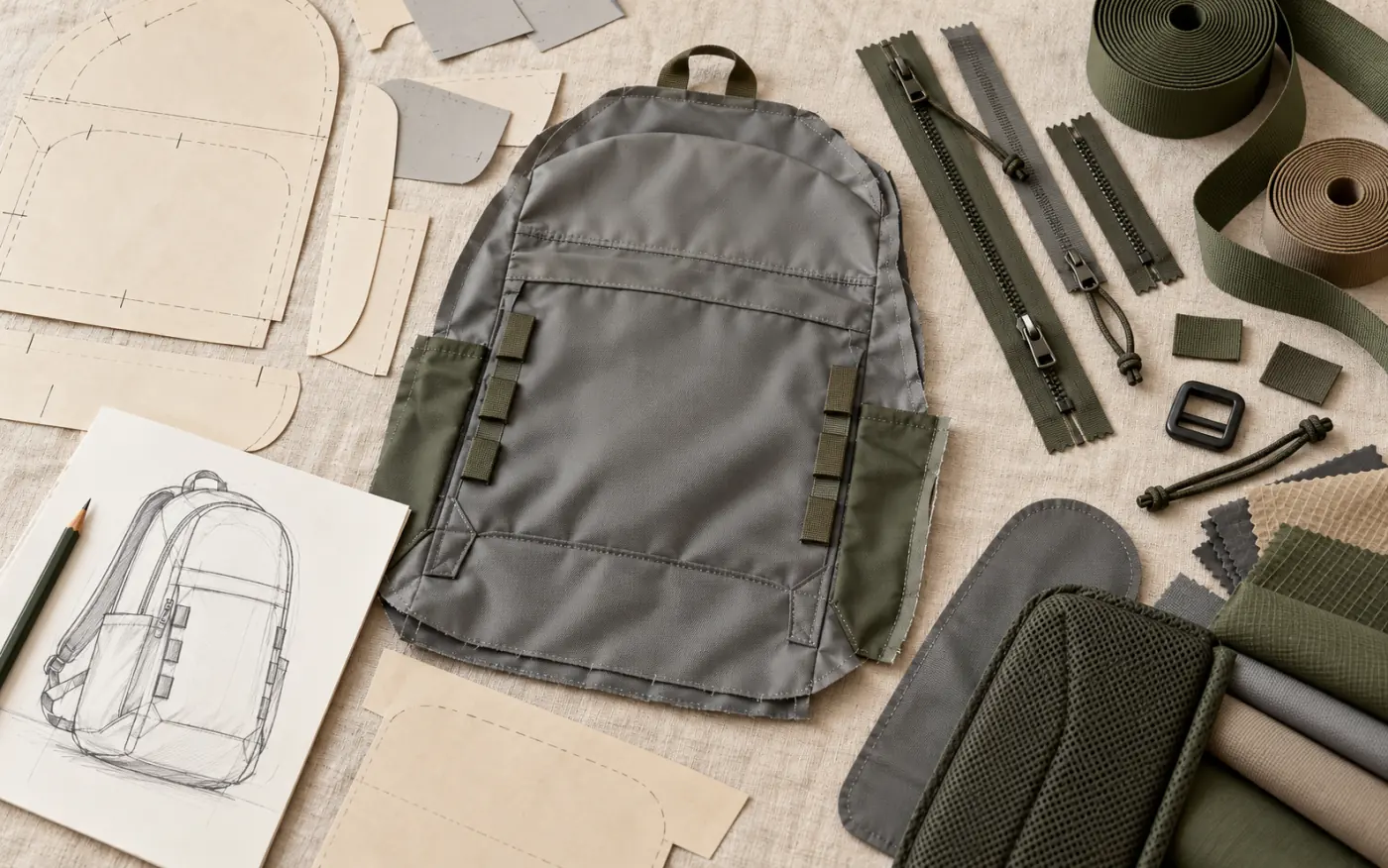
Review the chosen fabric on an assembled sample, where seams, padding and panel sizes reveal its practical behavior. Check whether the body holds the intended shape, pocket edges remain tidy and the logo looks consistent on the selected surface. Note any sample substitutions and resolve them before bulk approval. Retain the agreed swatch reference alongside the written specification so later deliveries can be compared with the same starting point. A useful approval record states both what has been accepted and which performance questions still require project-specific verification.
Buyer checklist
Bring these points into the first project discussion.
- Rank appearance, flexibility, intended use and care priorities.
- Request identifiable swatches with composition, weave and finish details.
- Compare shell fabric with lining, reinforcement and trim.
- Review branding on the selected fabric surface.
- Confirm the scope and documentation of any recycled material claim.
- Approve the assembled sample and record unresolved performance checks.
Common points to watch
- Using denier alone to rank fabric quality.
- Treating ripstop as a fiber or a guarantee against tearing.
- Inferring whole-bag waterproof performance from a coated swatch.
- Extending an outer-shell material claim to every component.
Frequently Asked Questions
Is a higher denier always better for a backpack?+
No. Denier describes yarn linear density, not the complete fabric or bag. Consider fiber, weave, finish, construction and the intended use, then compare the actual options on a sample.
Is ripstop a type of nylon?+
Ripstop describes a reinforcing fabric construction. It can be made using different fibers, so request both the fiber composition and construction details rather than treating ripstop as a complete material specification.
Does coated fabric make the backpack waterproof?+
A fabric coating alone does not establish whole-bag performance. Seams, needle holes, closures and openings also matter. Define the intended exposure and agree appropriate verification before making a product claim.
What should I request for a recycled fabric option?+
Ask which component and fiber the claim covers, what documentation supports it and how it relates to the material being supplied. Review the actual fabric and assembled sample as well.
Ready to discuss your collection?
Tell us what you need and we will help define the next step.
Request a Quote