Ask what the minimum actually applies to
Bag MOQ means the minimum order quantity discussed for a particular supply arrangement. It is only useful when the basis is clear. Ask whether a proposed minimum applies to the whole order, each style, each color or a particular component. A quotation may appear flexible at the finished-bag level while still depending on material or trim commitments. Understanding these layers helps you identify what needs to change when the proposed quantity does not suit your purchasing plan, instead of treating the minimum as an unexplained barrier.
Start the conversation with your intended assortment, estimated demand and priorities. Explain whether your constraint is total inventory, the quantity of each color or the amount of cash committed before launch. These are different problems and may lead to different options. Separate a request for a lower finished-bag quantity from a request for less customized development. STARDOTS confirms project-specific options after reviewing the bag style, materials, branding and production arrangement; there is no single minimum that can be assumed for every enquiry.
Understand fabric and color commitments
Fabric suppliers may have their own order conditions for weaving, dyeing, coating or other finishing work. A material that is already available in a suitable color can involve a different sourcing arrangement from a specially developed fabric or custom shade. Ask which part of the fabric specification is creating the commitment: the base cloth, the color, the finish or their combination. This makes it possible to consider an alternative deliberately, rather than changing a visible product feature without understanding why the change is needed.
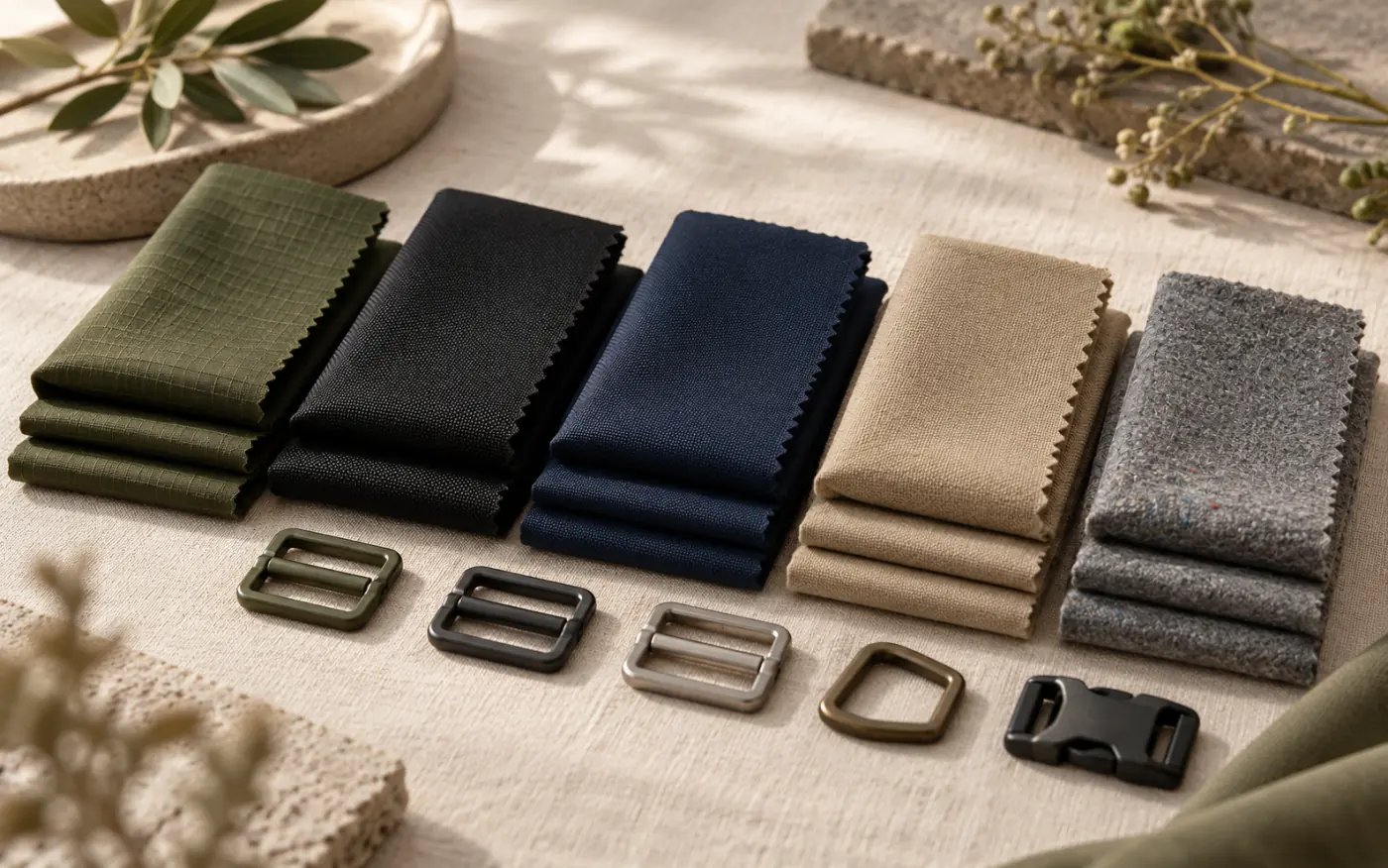
Color planning can multiply the number of separate material decisions. The outer shell, lining, webbing, zipper tape and thread may need coordinated choices, and each supplier may handle those choices differently. Ask whether proposed colors use shared materials or require separate production. If you consider an available color, approve a physical reference and confirm availability for the actual order. A sample swatch or a website image does not establish that the required material remains available, and a later repeat order may need a fresh availability review.
Look beyond fabric to trims and branding
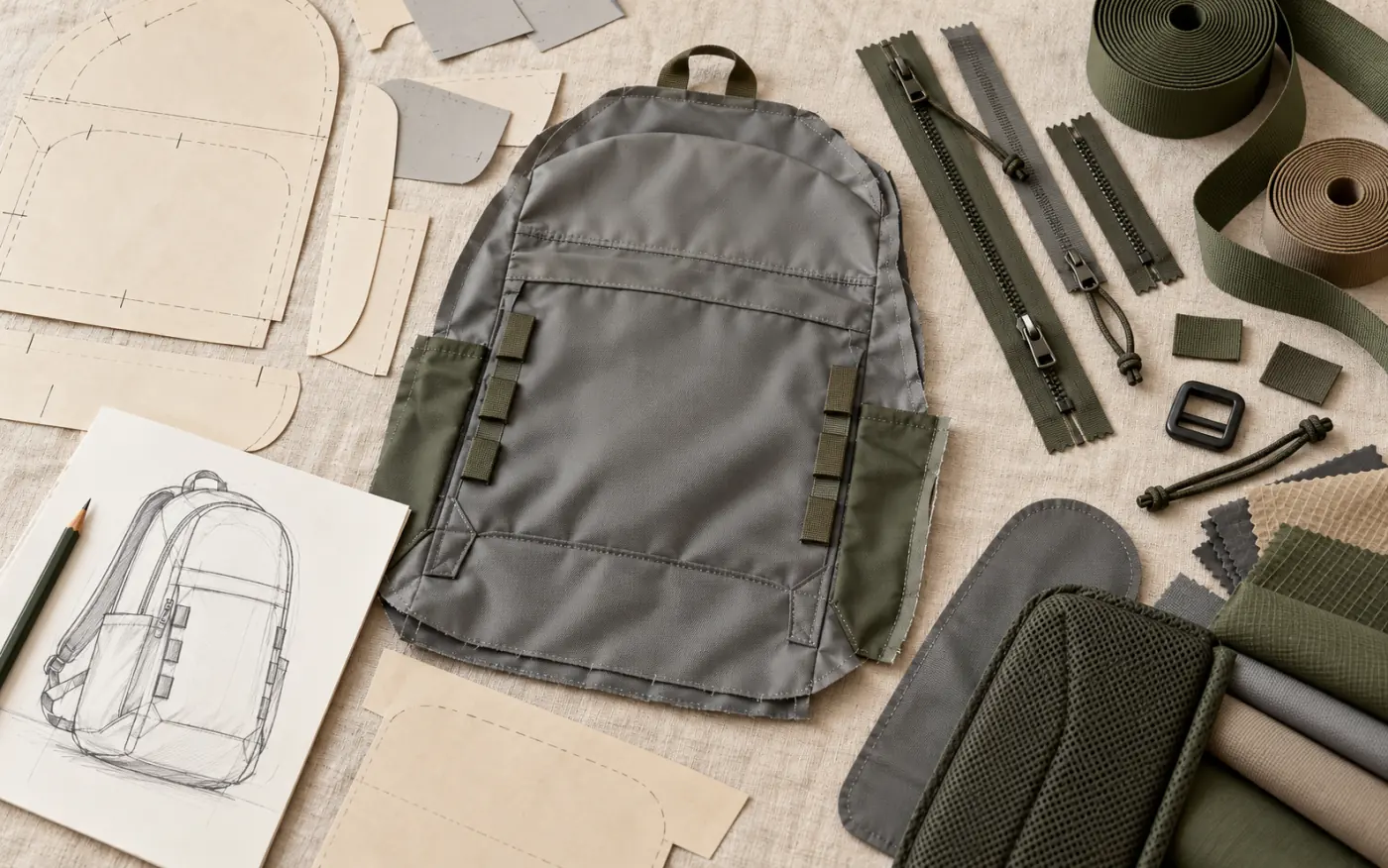
A bag can have a straightforward body fabric but depend on specialized components. Custom zipper pullers, shaped patches, distinctive hardware finishes and printed packaging may each involve their own setup or ordering conditions. Request a component-level explanation when these details affect the minimum. Ask whether a proposed charge relates to development, tooling, purchased components or finished goods. The purpose is to understand what is being committed, who holds any remaining materials and whether the arrangement fits your first-order plan.
Decoration methods can also change the economics of a project. Preparing embroidery artwork, printing screens, transfers, woven labels or molds involves different production steps, and the effect depends on the actual design and supply route. Do not assume one technique always permits a smaller order. Ask for alternatives that preserve the intended brand expression on the selected material. A label or simpler graphic may be worth reviewing, but it still needs sample approval and a specific quotation rather than being treated as a guaranteed low-minimum solution.
Structure an assortment that shares useful components
Review whether the proposed collection contains variations that customers truly need. A focused launch style can make purchasing easier to manage, while many similar shapes and colors may spread demand across separate production requirements. Consider sharing lining, webbing, hardware or packaging across styles where that supports the design. Ask the sourcing partner which components could actually be combined in purchasing. Similar-looking components are not necessarily identical specifications, and different styles cannot automatically be pooled just because they appear in the same purchase order.
Compare options with their trade-offs written down. You might keep the main silhouette while choosing an available shell color, or retain a distinctive logo while simplifying an interior feature. Evaluate how each change affects customer use, presentation and future replenishment. Avoid reducing complexity in a way that removes the reason the product belongs in your range. The aim is a coherent first order with understandable commitments, not simply the smallest quantity at any cost or a larger assortment that depends on uncertain future demand.
Negotiate scope and responsibility, not only quantity
Ask the supplier to explain the constraint before asking for an exception. A material purchasing condition may require a different discussion from production setup or decoration preparation. Request a proposal showing the available options, what changes in each and which costs are separate. If purchasing additional components is suggested, clarify ownership, storage, identification, payment and how those components could be used later. Do not assume unused materials will be held indefinitely or that they will automatically suit a future design revision.
If a trial order, split delivery or staged production is discussed, distinguish those arrangements carefully. A smaller shipment does not necessarily reduce the total purchase commitment, and a sample order does not establish the conditions for bulk production. Put the agreed scope, quantities, payment responsibilities and delivery arrangements in writing. Avoid presenting a hoped-for repeat order as a confirmed commitment. Honest demand assumptions help both sides judge feasibility and prevent the first order from relying on a future purchase that your sales plan cannot yet support.
Recheck the full proposal before committing
Compare proposals against the same product specification and commercial basis. Confirm whether the quoted minimum changes when you alter colors, artwork, packaging or materials. Review the total purchasing commitment alongside development charges, packing and the agreed delivery terms. A lower finished-goods quantity may shift costs elsewhere, so ask for the full picture rather than judging the proposal by a single line. Any revised plan should still include an approved sample and appropriate quality expectations; quantity flexibility does not replace product definition.
Keep an order planning sheet that records the style and color breakdown, shared components, open approvals and any special purchasing arrangement. Identify which assumptions need to be revisited for replenishment, such as material availability or the handling of remaining trims. Confirm the schedule only after the relevant decisions and production arrangement are understood. A practical enquiry to STARDOTS describes the target quantity and the aspects of the design that can change, allowing a project-specific discussion without assuming a fixed MOQ, price or delivery promise.
Buyer checklist
Bring these points into the first project discussion.
- Ask whether the minimum applies by order, style, color or component.
- Identify fabric, dyeing, trim and decoration commitments separately.
- Share the target assortment and actual inventory constraint.
- Compare shared-component and simpler design options with their trade-offs.
- Document ownership and handling of any remaining materials.
- Review the full purchase commitment and replenishment assumptions.
Common points to watch
- Assuming all styles or colors can be pooled under the same minimum.
- Treating split delivery as a reduced total purchase commitment.
- Promising future orders that are not supported by a confirmed plan.
- Accepting a lower quantity without reviewing shifted costs or scope.
Frequently Asked Questions
Can different bag colors count toward the same MOQ?+
Sometimes an arrangement can share components, but different colors may require separate fabric or trim commitments. Ask how the proposed minimum applies to each style, color and component before planning the assortment.
Does choosing an existing reference model remove the minimum?+
No. A reference can simplify design discussion, but material availability, branding, packaging and the production arrangement still need review. It is not a promise of stock or a particular order quantity.
Will split delivery reduce the purchase commitment?+
Not necessarily. Delivery quantity and total purchasing commitment are different. Confirm what must be ordered, paid for and stored, and who is responsible for the remaining goods or materials.
What should I send when discussing a smaller first order?+
Provide the style, desired color breakdown, branding, estimated quantity and destination. Explain your inventory constraint and identify acceptable changes so alternatives can be reviewed against the same product priorities.
Ready to discuss your collection?
Tell us what you need and we will help define the next step.
Request a Quote