Give the project a clear identity and purpose
A bag tech pack is the working description that connects your design intention with quotation, sampling and production discussions. Begin with a style name or code, document revision, issue date and responsible contact. Add the intended customer, use case and sales channel so technical decisions have context. Include the estimated quantity, color plan, destination and desired delivery window as planning information. Clearly distinguish confirmed requirements from targets, because a supplier should not have to guess whether an unfinished detail is mandatory or open to recommendation.
Use a short priorities statement to explain what must survive any cost or construction review. A roomy opening, quiet hardware or a particular silhouette may be more important than an optional interior pocket. Mark decisions that need supplier input and explain the outcome you want, rather than filling gaps with specifications you do not understand. A useful pack can evolve during development. Its value comes from making questions visible and keeping answers organized, not from appearing complete before the practical construction has been reviewed.
Show the construction from every useful angle
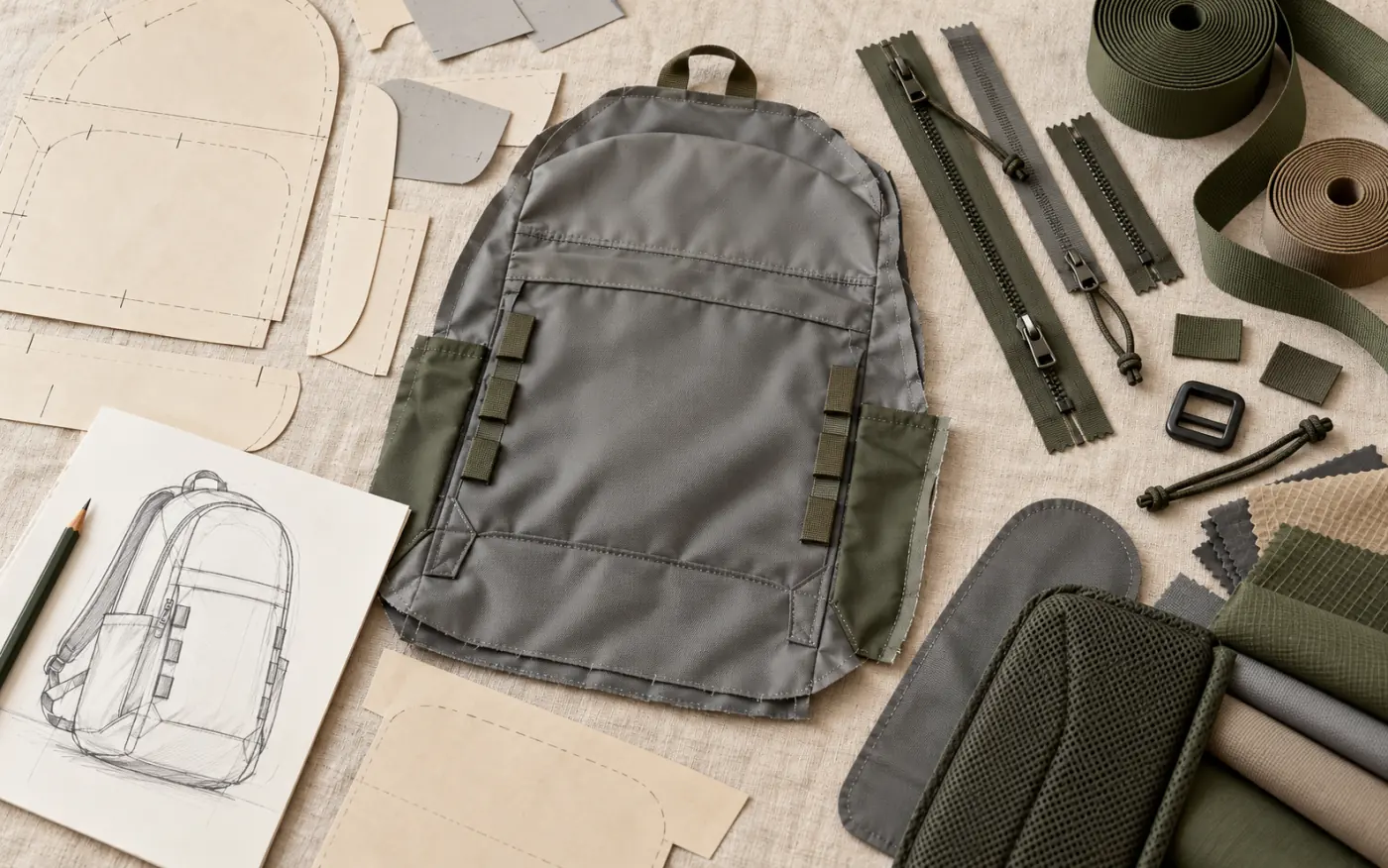
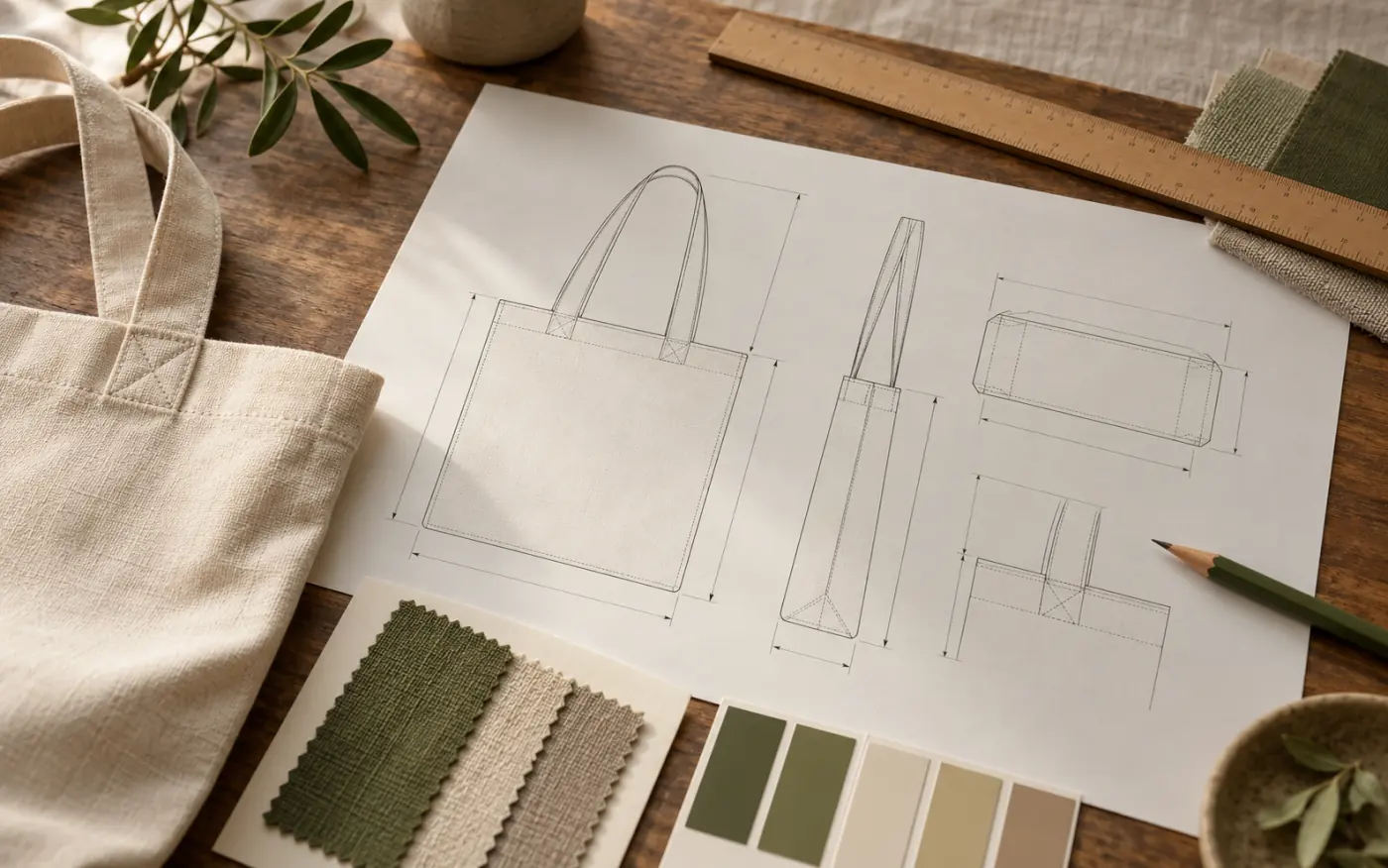
Provide front, back, side, base and interior views wherever they explain the design. Use consistent labels for panels, pockets, straps, handles and closures across drawings. A perspective sketch helps communicate appearance, but flatter technical views make locations and proportions easier to discuss. Show hidden details such as pocket depth, lining attachment and the route of an adjustable strap. If a feature changes when opened, folded or worn, include a view of that state so the supplier does not have to infer the mechanism.
Annotate construction questions near the relevant area. Explain whether a seam should be visible, how an edge should look and which attachments carry the load. If you use reference photographs, identify the exact detail they illustrate and avoid letting conflicting references become competing instructions. Distinguish a desired visual effect from a prescribed sewing method when you are open to technical advice. This gives a production partner room to propose a workable solution while preserving the feature that matters to the customer and the overall design direction.
Define measurements and the way they are taken
Create a measurement table linked to marked points on the drawings. State the unit and explain whether each dimension is measured flat, along a curve, around an opening or on the assembled bag. Describe the bag’s condition during measurement, including whether it is empty, shaped or adjusted to a particular position. Include usable openings and internal compartments where fit matters. Overall dimensions alone cannot tell a supplier whether a laptop, document folder or intended retail item can pass through the opening and sit comfortably inside.
Discuss tolerances in relation to function and construction rather than copying an unrelated product’s table. A dimension controlling device fit may need different attention from a soft panel that changes shape when handled. Show which measurements are critical and ask how they will be checked consistently. If you provide physical items for fit review, identify them clearly and record the review conditions. Keep the agreed measurement method with the specification so a later inspection does not produce a disagreement simply because the buyer and supplier measured the same feature differently.
Build a component list that can be quoted
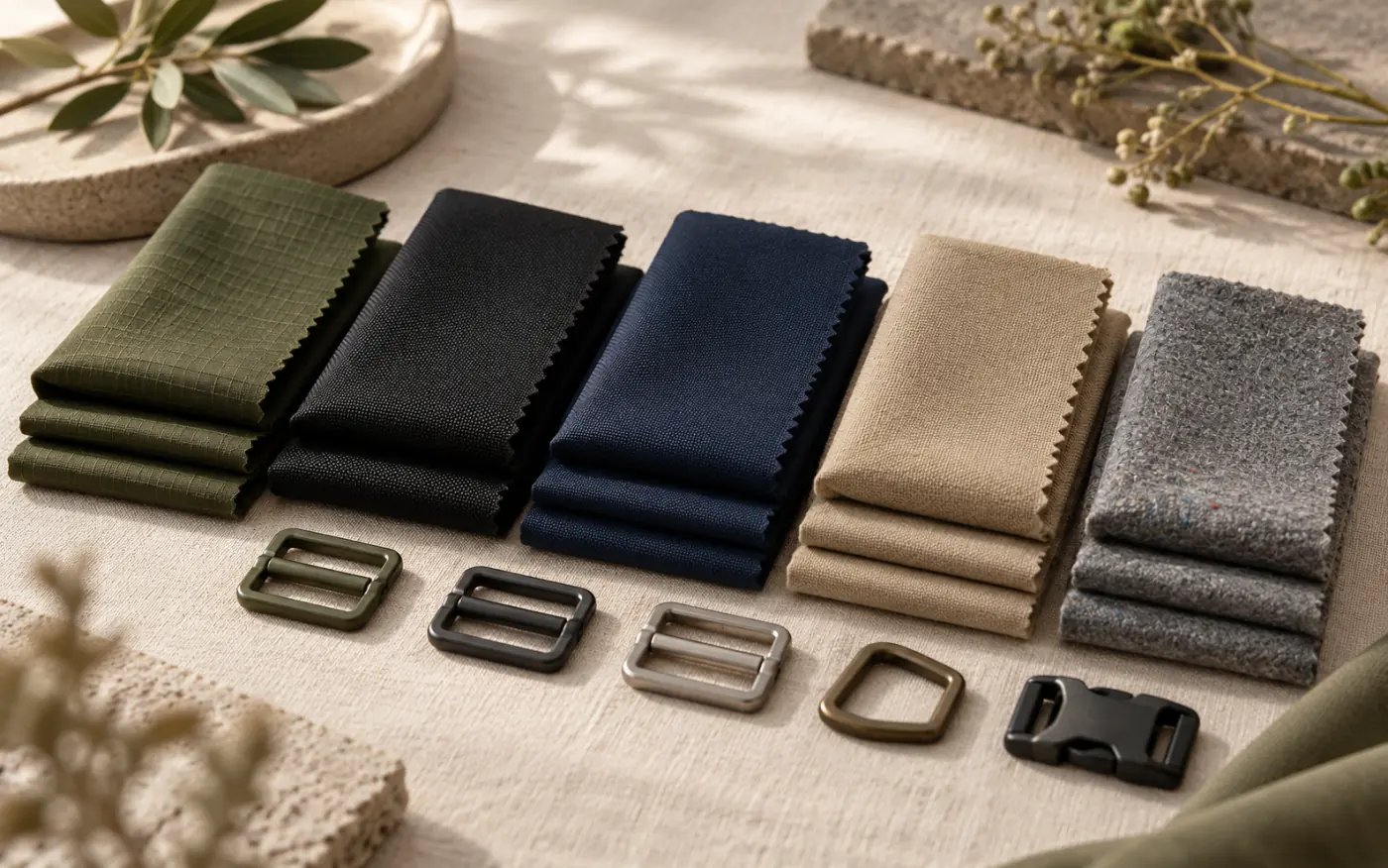
List the shell, lining, reinforcement, padding, webbing, thread, zippers, hardware and branding components in a bill of materials. Connect each item to its location on the drawing and give an identifiable reference wherever possible. Describe composition, construction, finish and color requirements without relying on vague terms such as premium or heavy duty. If the exact material is undecided, state the intended appearance and functional priority, then request a clearly identified proposal. This makes material alternatives easier to compare without silently changing the design.
Show which components are shared between colorways and which change. A body color change may also affect zipper tape, webbing, lining, thread and printed labels, so do not assume the supplier will interpret the combination you have in mind. Identify any sample-only substitutions and explain that bulk approval remains pending. Ask your buyer which standards or tests apply, including chemical or labeling requirements in the target market. Place those requests alongside the relevant material or component so they become part of the sourcing discussion before a sample is assembled.
Specify artwork, labels and packing together
Supply editable artwork in an appropriate format, with the intended logo size, color references, placement and decoration method. Mark placement from a stable construction feature, such as a finished edge or panel center, rather than relying on an attractive mockup. Include the orientation of artwork when the bag is carried or opened. For woven labels, patches or badges, show the attachment method and visible area. If the technique is undecided, ask for options on the selected material and leave the decision explicitly open for sample review.
Add label copy, hangtag information and packaging instructions to the same project record. Identify who supplies and approves product names, barcodes, care text and other buyer-required information. Explain how the bag should be folded or supported, how hardware should be protected and where labels should sit. Include carton identification and receiving requirements if available. These details can affect both the quotation and how the product arrives, so treating them as later administrative work can leave important costs and presentation decisions outside the initial proposal.
Manage revisions from enquiry through approval
Issue a clear revision whenever agreed changes alter the working specification. Maintain a concise change log that tells the supplier what changed, where it changed and whether another sample or quotation review is required. Keep sample feedback separate from approved instructions until decisions are resolved. Use photographs with annotations for problems that are difficult to describe, then transfer the agreed result into the main pack. A chat message can help explain a decision, but it should not become the only record of a production-critical change.
Before approval, compare the pack with the actual sample and close any contradictions. Confirm the approved material references, measurements, artwork and packing version, along with unresolved testing or inspection requirements. Ask the supplier to identify remaining assumptions instead of simply acknowledging receipt. STARDOTS can coordinate review and sampling with suitable production partners using a sketch, reference or technical pack; the scope is agreed for the project. A maintained pack then becomes a shared basis for quotations, inspections and repeat-order discussions without implying that later production arrangements are automatically unchanged.
Buyer checklist
Bring these points into the first project discussion.
- Add a style identifier, revision and responsible contact.
- Provide labeled views of the exterior, interior and moving features.
- Link measurement points to methods, units and agreed tolerances.
- List materials, trims and colorway combinations with clear references.
- Include artwork, labels, packaging and buyer-required checks.
- Resolve sample differences and update the change log before approval.
Common points to watch
- Giving conflicting references without identifying the intended details.
- Listing dimensions without explaining how they are measured.
- Hiding undecided materials behind vague quality descriptions.
- Leaving approved changes only in chat messages.
Frequently Asked Questions
Do I need professional technical drawings before making an enquiry?+
A sketch or reference can start the discussion. Add clear annotations and intended use, then identify the details that need development. Quotation and sampling become more useful as materials, measurements and construction are defined.
Should the tech pack include tolerances?+
Yes, once they have been discussed for the product. Link tolerances to the agreed measurement method and prioritize dimensions that control fit or function rather than copying values from another bag.
How should I handle a material that is not yet selected?+
Mark it as open, describe the desired appearance and use, and ask for identifiable alternatives. Record the approved choice and remove any temporary sample substitution before bulk approval.
What happens when the sample and tech pack disagree?+
Identify the difference and agree which detail is intended. Update the pack and, where needed, the sample reference before approving production. Do not leave conflicting instructions for the production partner to interpret.
Ready to discuss your collection?
Tell us what you need and we will help define the next step.
Request a Quote