Agree the inspection basis before production
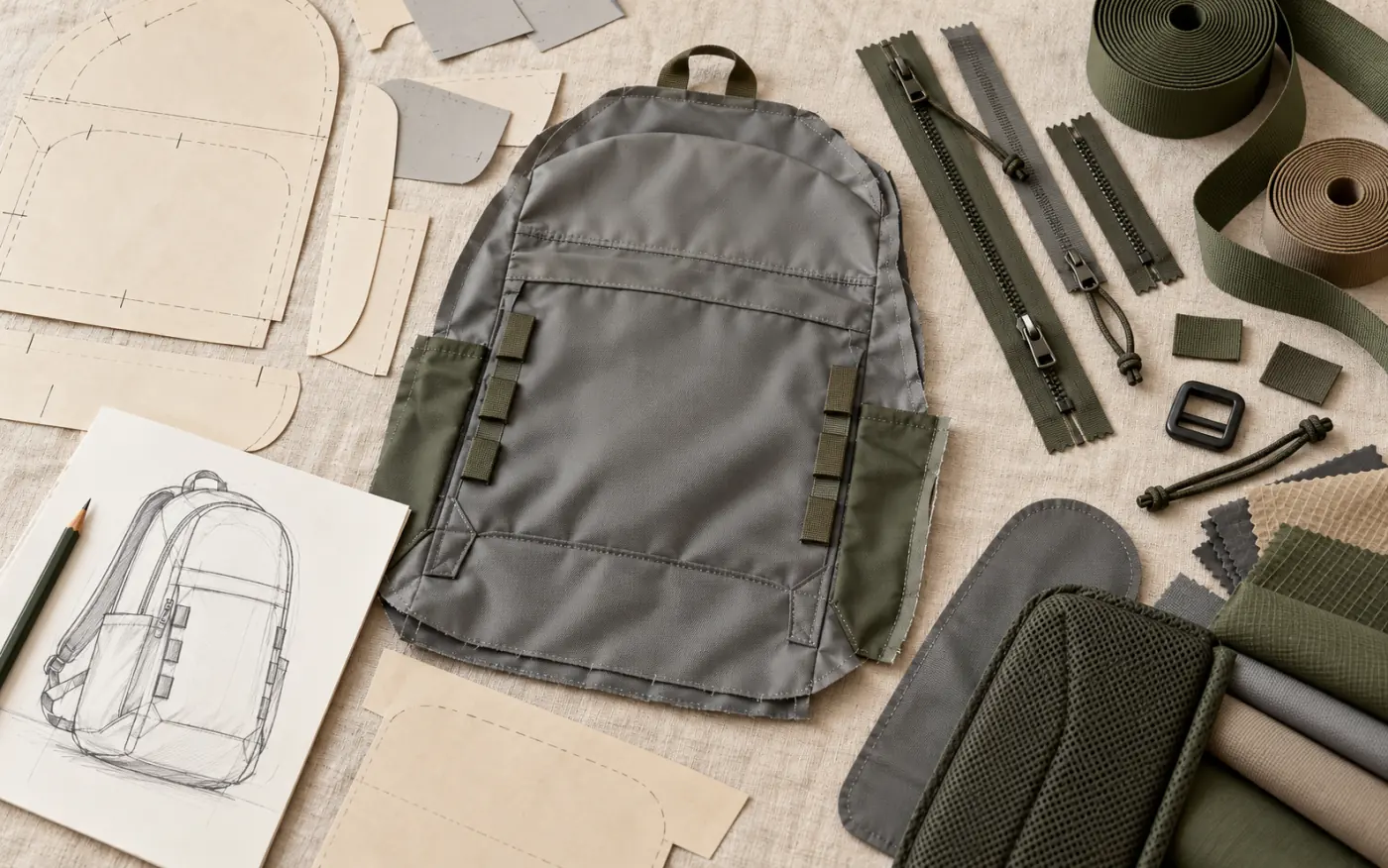
Bag quality inspection needs a defined reference before anyone starts checking products. Gather the approved sample, current specification, material references, artwork and packing instructions. Identify any differences between the sample and written requirements and resolve them before inspection is arranged. Describe what matters to the customer: a device must fit, a handle must be comfortable, or a closure must operate without catching the lining. These priorities help turn a general request for good quality into observable checks that the buyer and production partner can discuss consistently.
Agree the inspection scope, stage, sampling approach, reporting format and decision authority for the order. Explain how findings will be classified and which issues require immediate escalation. Distinguish visual and functional inspection from laboratory testing, since an inspector handling finished bags cannot establish every material property. Ask your buyer which standards or tests apply, including chemical or labeling requirements in the market. Any required testing should have its own agreed scope and evidence; an inspection checklist does not imply certification or a result that has not been confirmed.
Check materials and stitching before details are hidden
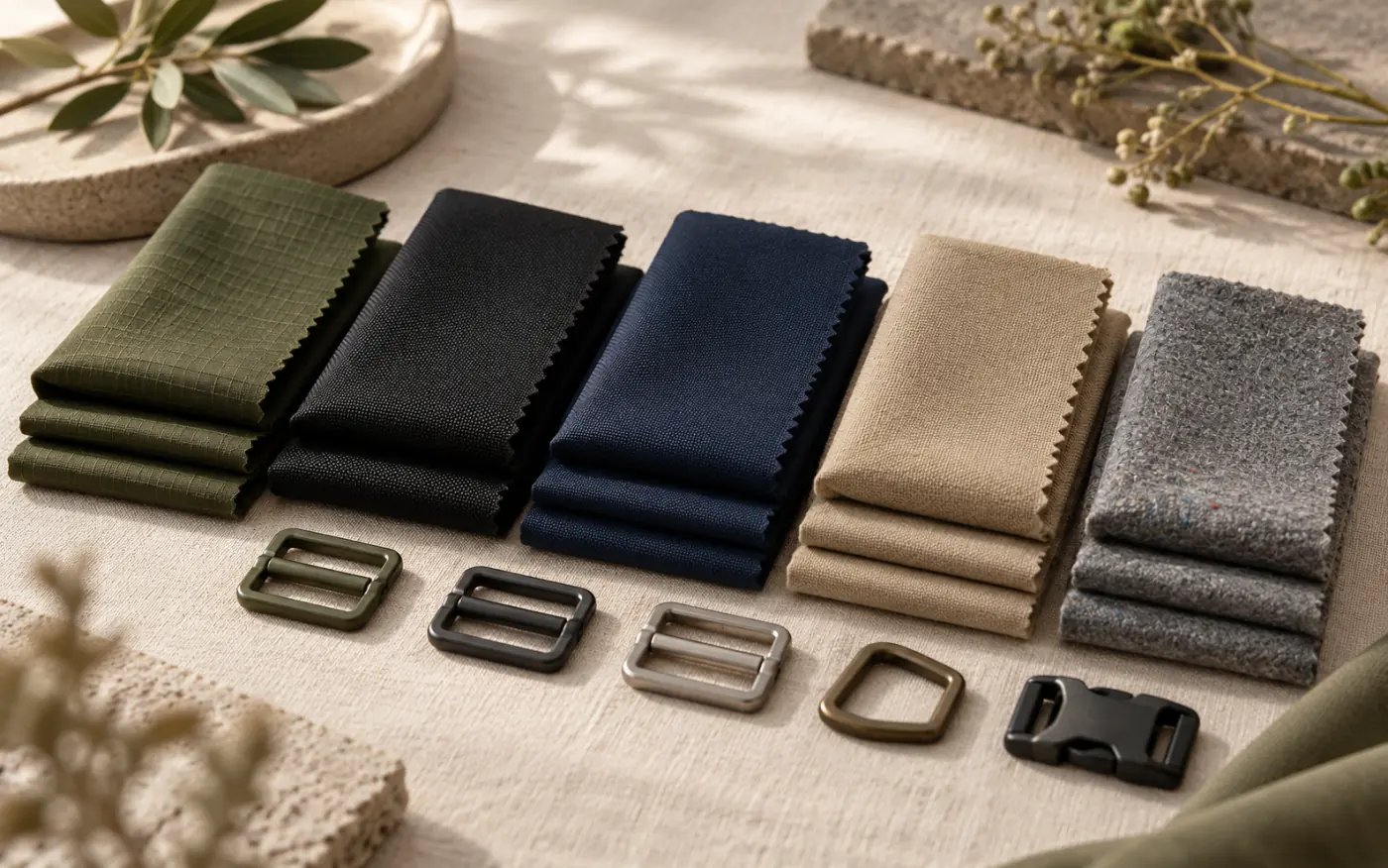
Compare incoming or prepared materials with the approved references, within the agreed checking scope. Confirm the intended shell, lining, webbing, padding and reinforcement, including color, texture and placement where these can be assessed. Look for visible damage, contamination, inconsistent finish or an unexplained substitution. Keep material identification attached to the findings so a photograph can be traced to the relevant component or batch. A visual match is useful evidence of appearance, but it does not independently establish composition or performance claims that require other documentation or testing.
Review stitching and assembly at seams, pocket corners, handle bases and strap attachments. Look for skipped stitches, loose threads, open seams, uneven alignment, puckering and reinforcement that differs from the specification. Inspect the inside finish as well as the face of the bag. Where an attachment will be covered by lining, arrange the relevant check while it is still accessible. Agree any strength-related evaluation separately, including the method and conditions; pulling a handle by hand may reveal an obvious issue but is not a documented load test.
Operate zippers, closures and hardware in context
Open and close zippers along their full intended path, checking whether sliders move smoothly and whether the lining or binding catches. Look at zipper tape alignment, end finishing and the way the opening behaves when the bag is shaped for use. Test pocket access with representative contents where that is part of the agreed review. A zipper can work on an empty flat sample yet become awkward when nearby compartments are filled, so the operating condition should reflect the function you are trying to assess.
Check buckles, adjusters, snaps, magnetic closures and other hardware against the approved component references. Review fit, operation, visible finish and any exposed sharp or rough edges. Confirm that straps route correctly through adjusters and that the intended adjustment can be made without obstruction. Inspect attachment points and the covered reverse side of badges or fittings where relevant. Record exactly what was checked rather than converting a brief functional review into a broad durability claim. If repeated-use or other performance testing is required, define it as a separate agreed activity.
Measure fit and inspect the branding
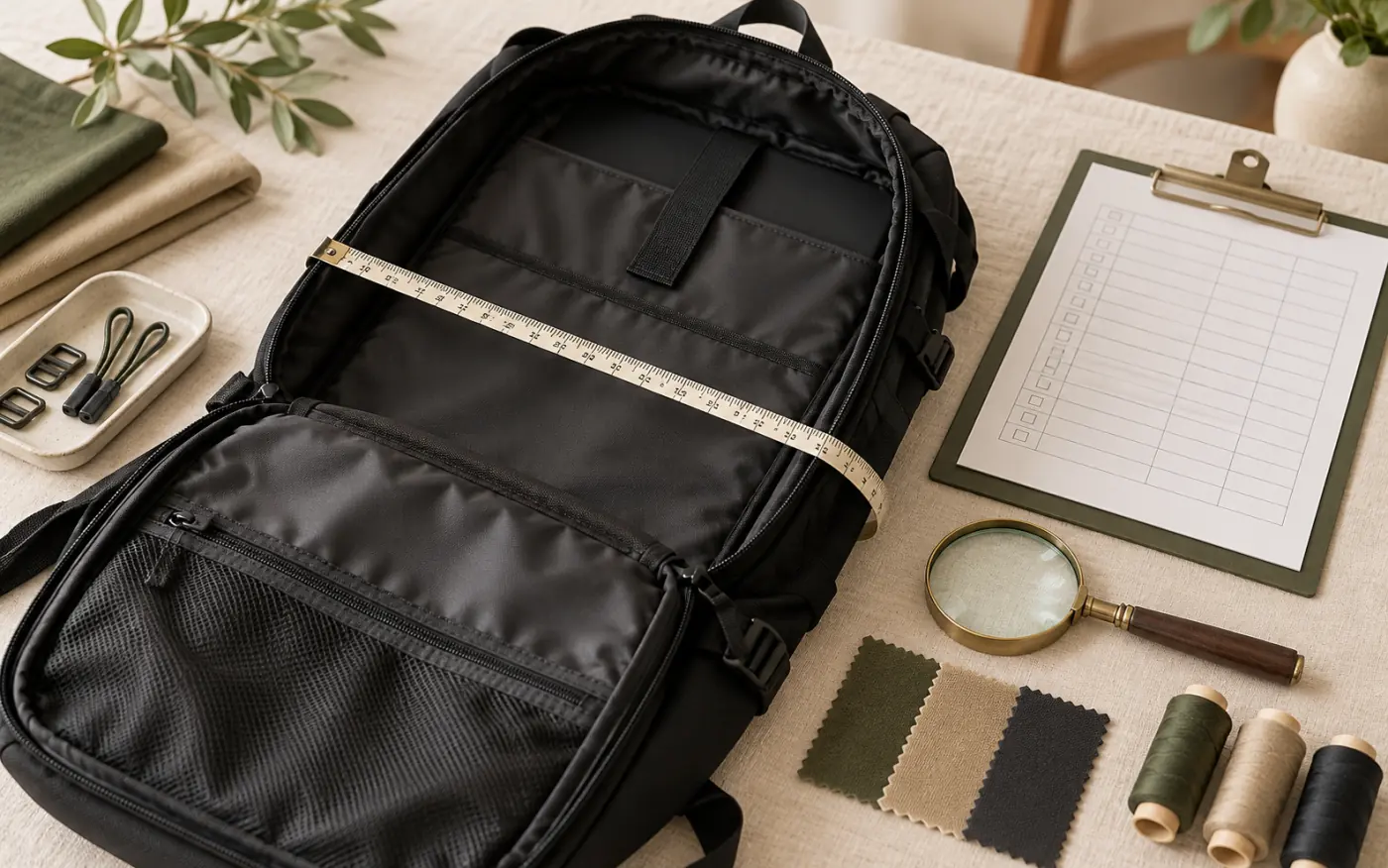
Measure the bag using the method and conditions stated in the specification. Check critical openings, usable compartments, handle drop and strap adjustment as well as overall dimensions. Soft bags change shape with filling and handling, so measurement differences need to be assessed against the agreed method and tolerances. If a compartment is intended for a particular item, check the actual fit or the agreed representative reference. External dimensions do not establish interior usability, and a correct measurement does not necessarily show whether an opening is convenient for the intended customer.
Compare logos, labels and decoration with the approved artwork and physical reference. Check spelling, orientation, location, color appearance and the way the mark sits relative to seams or pockets. Inspect print edges, embroidery backing, patch attachment and badge finishing as appropriate to the selected technique. Review internal labels and hangtags for the correct product identity and buyer-approved copy. A visually convincing logo can still be the wrong revision, so the inspector needs access to the actual approved files and references rather than a general brand image.
Plan checks at useful production and packing stages
Different stages answer different questions. A pre-production review can align materials, construction instructions and the sample reference before assembly begins. In-process checks can reveal repeating workmanship issues while corrections are still practical. A pre-shipment inspection can review completed goods and packing against the agreed scope. Decide which stages suit the project and how findings move between them. Checking an early sample does not establish the condition of bulk goods, while a final inspection may come too late to see components already hidden inside the construction.
For packing, confirm product identity, color and quantity against the order and packing instructions within the agreed scope. Check individual protection, folding, shape support, hangtag attachment and the position of any barcode or product label. Review carton marks, assortment and handling protection, with attention to hardware or decoration that could rub against another bag. If a retail or warehouse receiving system is involved, use the buyer’s actual instructions. Attractive packaging is not enough if the wrong style is identified or the recipient cannot match cartons to the expected contents.
Turn findings into decisions and follow-up
An inspection report should identify the order, checked stage, reference documents, sample selection and conditions of the review. Record findings with clear descriptions and photographs that show both the detail and its location. Explain what was not covered or could not be assessed, rather than allowing a report to imply unrestricted approval. Link each issue to the relevant specification or agreed expectation. This gives the buyer and production partner a basis for deciding whether clarification, corrective work, further inspection or additional testing is needed.
Agree who authorizes corrective action and who decides whether the order can proceed to shipment. After rework, check the affected issue again within an agreed scope and consider whether the correction has introduced another problem. Keep the original finding and closure evidence together. STARDOTS can coordinate in-process and pre-shipment checks with scope agreed for each project; this does not imply that any particular order has already passed. The useful outcome is a documented decision against defined requirements, with remaining uncertainties visible to the person responsible for accepting the goods.
Buyer checklist
Bring these points into the first project discussion.
- Align the sample, specification, artwork and packing references.
- Agree stages, sampling, reporting and the person authorized to decide.
- Check materials and hidden reinforcement while they are accessible.
- Review stitching, closures, hardware, measurements and functional fit.
- Verify logos, labels, product identity and packing within the agreed scope.
- Record findings, corrective action and any required reinspection.
Common points to watch
- Using a sample approval as proof of bulk production quality.
- Expecting visual inspection to establish composition or chemical properties.
- Checking dimensions without a shared measurement method.
- Authorizing shipment without resolving reported issues or open decisions.
Frequently Asked Questions
Is a pre-shipment inspection enough for every bag order?+
The appropriate stages depend on the construction and project risks. Hidden attachments or repeating assembly issues may need earlier checks. Agree the stages before production rather than assuming the final review covers everything.
Can visual inspection confirm fabric composition or chemical requirements?+
Visual inspection cannot establish those properties by itself. Request the relevant material documentation and discuss any buyer-required testing separately, with a defined scope and evidence.
What reference should the inspector use for dimensions?+
Use the approved specification, measurement points, method and tolerances. State the bag’s condition during measurement and include functional fit references where the intended contents matter.
What should happen after a defect is reported?+
Record the finding, agree the corrective action and assign a decision owner. Review the affected goods after correction as agreed, retain closure evidence and resolve shipment authorization explicitly.
Ready to discuss your collection?
Tell us what you need and we will help define the next step.
Request a Quote